Illustration provided by iStockPhoto.com
Dear friends,
We have reached the end-of-the-year sprint! How are you holding up? We host a big Thanksgiving at my childhood home, and I am filled with gratitude and also fatigue. I hope you all spend some time connecting with loved ones during this crazy month.
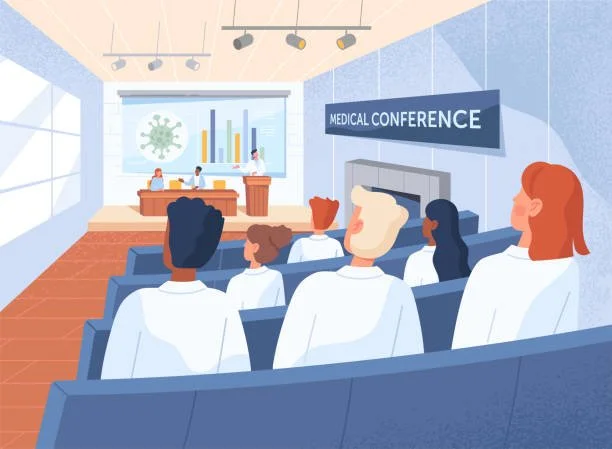
I just got back from attending the American Medical Informatics Association Annual Meeting in Atlanta, and I had the chance to observe a range of colleagues and reflect on how many ways there are to go to a conference. (We all know a few conference “types”- the person who is just there to network, the person who holes up in their hotel room to write a grant, the person who attends every single session and turns poster walks into journal club, and of course the “this is more of a comment than a question” perpetrator at every panel. We’re not talking about them today!) Let me know if you recognize yourself in any of the more nuanced experiences I observed!
One of my UCSF colleagues was a first- time attendee. They are a subspecialist that has risen to the very top of their field. When they go to their usual conference, they are a rock star. Now they are focusing more on informatics, and they’re meeting an entirely new group of people. There were two cool aspects of observing them at the conference. First, I loved their attitude- they embodied the “beginners mindset” of openness and curiosity. Second, people who met them were deeply impressed. Even though no-one really knew their credentials/ experience, their brilliance came through in their presentations and conversations. It reminded me that the best scientists are the ones who are most eager to learn, and that many others recognize and respond to that quality.
Another UCSF colleague has a significant leadership role, arrived early for invite-only, behind-the-scenes work, spoke at multiple panels and, honestly, seemed to be everywhere at once. They were amazing to watch- stopping every 10 feet to exchange greetings, hugging half the attendees, and taking every opportunity to introduce their students and trainees to other VIPs. It was clear that they are invested in the organization as their “professional home” and that others recognize their leadership. When I ran into them alone in the elevator, they admitted to being very tired.
My longtime distance mentor is an elder statesman at this meeting. He presided over the proceedings in a jocular way. He knows everyone, had a few assigned roles, and experienced zero stress or over-commitment. He engaged deeply in the science and clearly had a great time. I estimate it will be at least ten years before I can aspire to that level!
I talked with two colleagues with young children who were at the conference. One had brought their child because their parents (baby’s grandparents) live nearby. They attended sessions very selectively and were just happy to have made it at all. Another lamented being away from their one-year-old for three nights, noting that the meeting was useful and fun, but it felt hard to be away for so long. Their different choices and experiences reminded me that travel is just hard at that stage of life. There’s no perfect way to do it.
My own experience was very run-of-the-mill. I’ve probably been to this conference ten times, so it’s not exactly new, but it’s not my professional home either. I know some people, but there are plenty of heavy hitters that I’ve never spoken to. I did wish while I was at the conference that I felt more involved- being active in a professional society clearly pays a lot of dividends! Instead of regretting that I haven’t prioritized this aspect of academic work so far, I’ve decided to look ahead. We can’t do everything at once, but over the course of a career there are many ways to experience a conference!
So which conference-goer are you? Just don’t be that one who hogs the mic during the Q and A, and we can be friends! As always, I love to hear from you. Please share widely, as usual, and let others know they can sign up here.
Warmly,
Urmimala