Authors: Namuun Clifford, Kathryn E. Kemper-McIsaac, Haoxiang Yu, Taylor Rapson, Urmimala Sarkar, Elaine C. Khoong
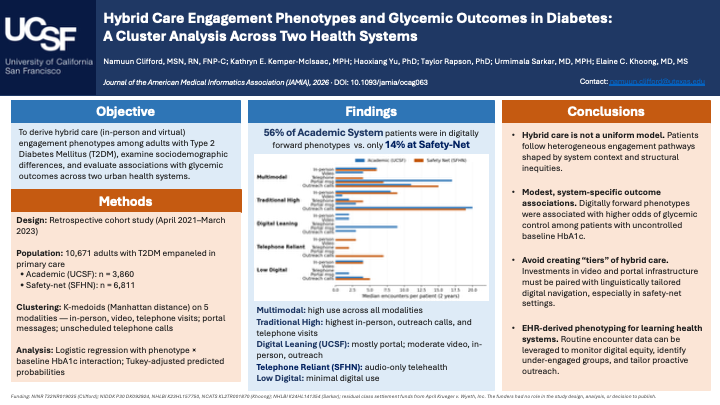
Digital health engagement is often treated as binary. For example, patients either use tools like portals and telehealth or they do not. However, this study suggests a more nuanced reality. In a retrospective cohort of over 10,000 adults with type 2 diabetes across two health systems (UCSF and Sutter Health), researchers applied cluster analysis to identify distinct “digital engagement phenotypes” based on use of messaging, phone, video, and portal functions. They found that engagement patterns varied widely, from highly digital, asynchronous users to those relying primarily on telephone or in-person care. Further, these patterns were not evenly distributed as safety-net patients were far less likely to fall into digitally forward groups. Importantly, patients using more asynchronous, portal-based tools had better glycemic control, while those with low or phone-reliant engagement were more likely to have uncontrolled HbA1c. These findings challenge one-size-fits-all approaches to digital care and highlight how structural factors shape engagement, underscoring the need for more inclusive design, targeted support, and health system strategies that account for diverse pathways into care.